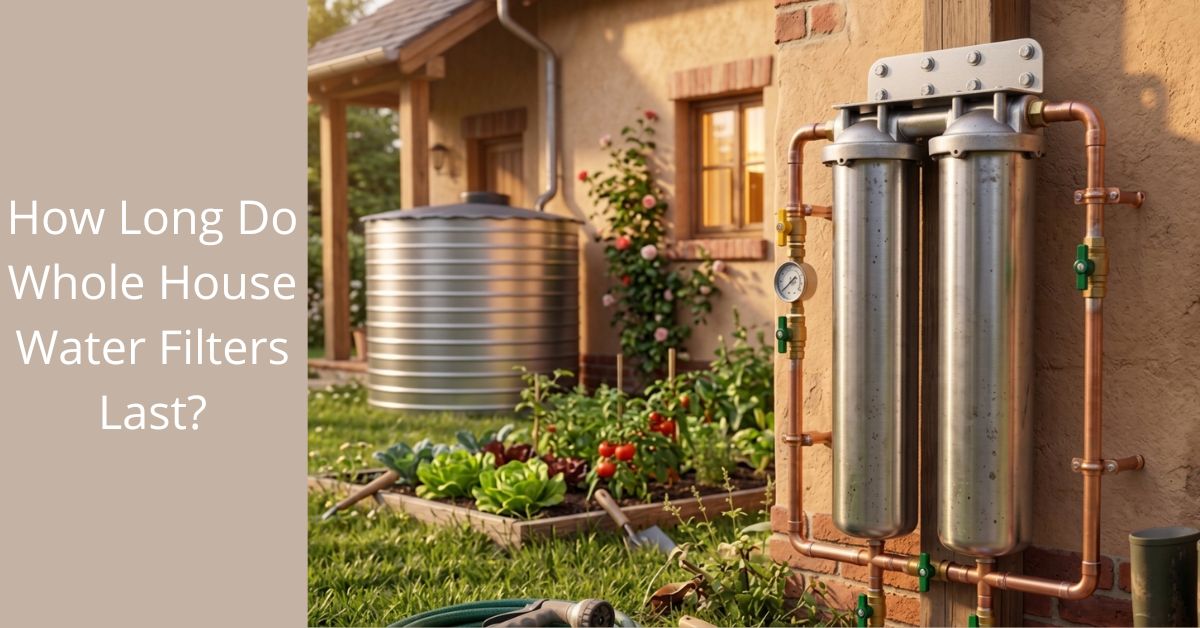
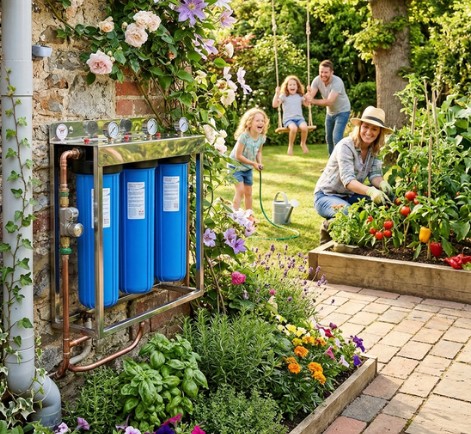
When my family and I committed to upgrading our home’s wellness routine, investing in a high-quality water system was right at the top of our list. There is something incredibly grounding about knowing that every single tap in your house, from the kitchen sink where you wash your organic vegetables to the shower where you unwind after a long run, is delivering clean, purified water.
But once you’ve done the research and installed the best home water filtration system for your space, a very practical question naturally pops up: How long is this actually going to last before I need to roll up my sleeves and maintain it?
If you are trying to map out your household maintenance or budgeting for the future, let’s break down exactly what to expect from your system’s longevity.
What is the lifespan of a whole house water filter?
When we talk about the overall lifespan of a whole house water filter system itself, we are usually looking at a very robust piece of equipment. The heavy-duty housing units, tanks, and main valves are built to endure years of continuous water pressure.
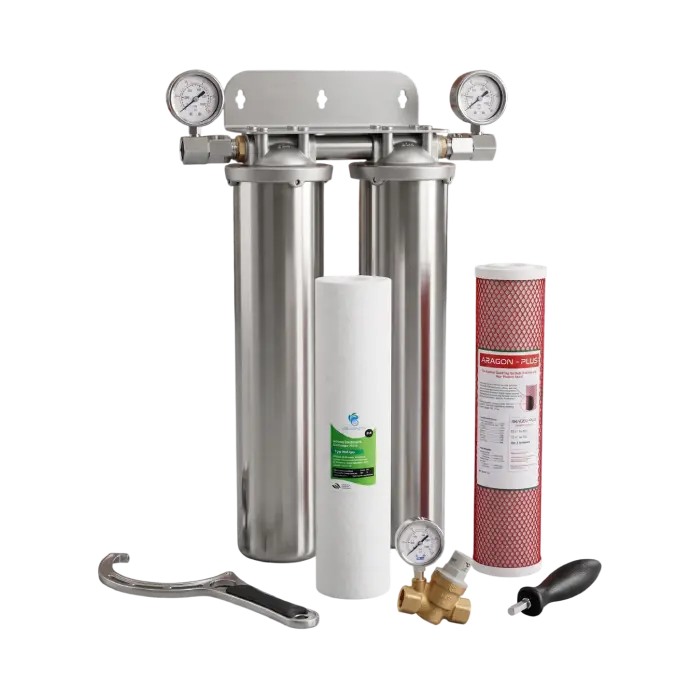
For high-capacity tank-based systems (like large granular activated carbon or copper-zinc mineral tanks), the core system can easily last anywhere from 5 to 10 years, or up to 4,000,000 litres of water treated. Some premium filtration housings are so durable they will practically last a lifetime, requiring only periodic component upgrades or valve replacements.
On the flip side, if your home utilises a multi-stage cartridge-based system, or a specialised reverse osmosis filter setup for ultra-pure drinking water at the point of use, the durable plastic housings themselves will last for many years, but the internal cartridges are a completely different story.
It helps to think of your water filtration setup like a high-end machine or a premium appliance: the main structure is a long-term investment built to last for a decade or more, but the consumables – the filters themselves – have a shelf life dedicated to doing the heavy lifting.
How often do you need to replace whole house water filters?
While the physical structure of your home water filter enjoys a long life, the internal filtering media needs regular care. How often you need to change them depends heavily on the specific stage of filtration and your unique household water usage.
Here is a quick, practical guide to how the different stages typically break down:
- Sediment Pre-Filters (Replace every 6 to 12 months): This is your system’s first line of defense. It catches the heavy particles like rust, silt, and clay. Because it takes the brunt of the physical debris, it clogs the fastest. Keeping this fresh protects the rest of your system from premature wear.
- Activated Carbon Block Filters (Replace every 6 to 12 months): This is where the magic happens for taste and odour. Carbon blocks work hard to target chlorine, volatile organic compounds (VOCs), and agricultural chemicals. Over time, the binding sites on the carbon become fully saturated, requiring a fresh replacement to maintain peak performance.
- Reverse Osmosis Membranes (Replace every 3 to 6 years): If your configuration incorporates a central or targeted reverse osmosis filter membrane, this component is incredibly fine-tuned to strip out dissolved solids and microscopic impurities. Because it is protected by the pre-filters, the membrane itself lasts significantly longer before needing a swap.
Signs It’s Time for a Change
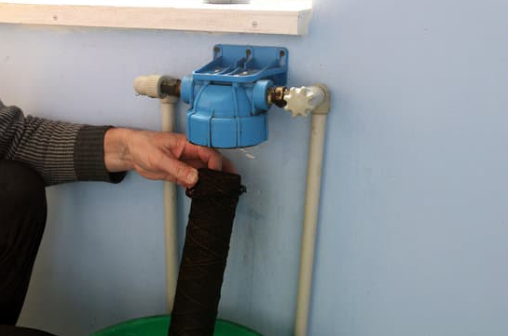
Outside of the calendar recommendations, your home will often give you subtle clues when the filtration media is reaching capacity. The most immediate sign is a noticeable drop in water pressure. When a sediment or carbon filter is packed full of trapped particulates, water has a harder time pushing through, resulting in a weaker stream in your shower or kitchen tap.
You might also notice a slight shift in the taste or smell of your water, indicating that the carbon media has reached its saturation point.
Keeping Your System Flourishing
To get the absolute most out of your investment, I always recommend keeping a simple logbook nearby or setting a recurring digital reminder. Staying on top of these quick swaps ensures your household enjoys uninterrupted access to pristine, non-toxic water for cooking, hydration, and bathing.
Taking care of your filtration system doesn’t take much time, but the reward – pure peace of mind every time you turn on the tap – is entirely worth it!