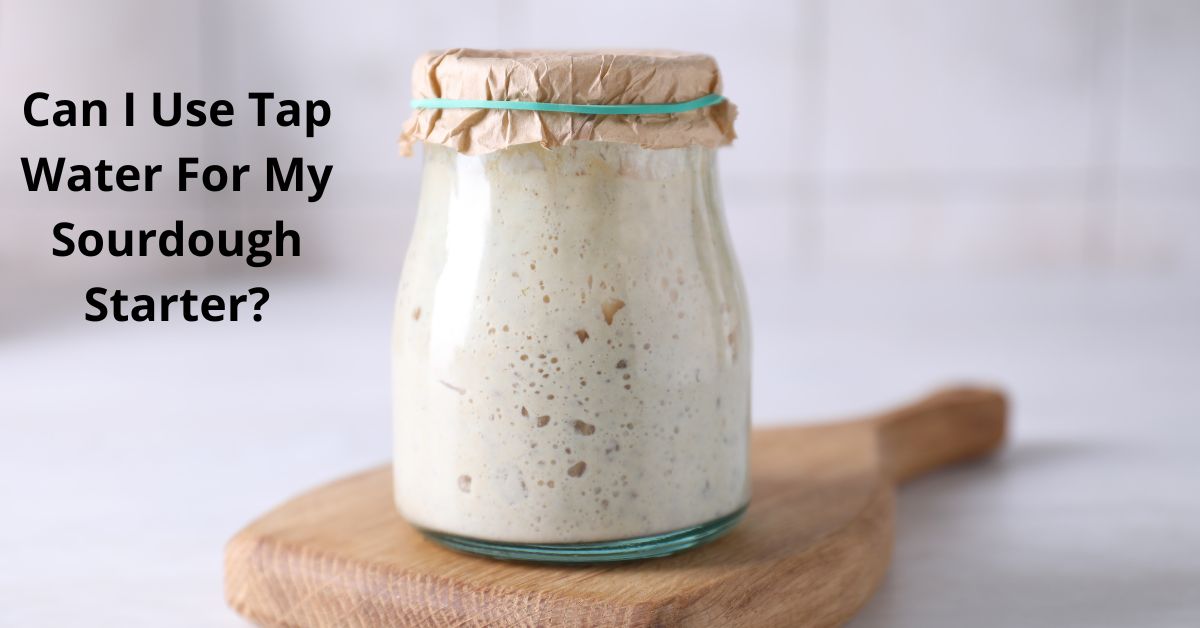
Some sourdough guides insist tap water will kill your starter. Others say it’s a total non-issue and you’re overthinking it. Neither camp is entirely wrong. It mostly comes down to what your local water authority puts in the pipes, and once you know that, it’s a decision you can make deliberately rather than a rule you follow blind.
Can I use tap water for sourdough starter in Australia?
Generally, yes, though it depends on your suburb. Australian water utilities disinfect mains supply with either free chlorine or chloramine (chlorine bound to ammonia), and which one you get changes the answer. Sydney, Adelaide and most of Brisbane run on chloramine, while Perth, Canberra, Hobart, Darwin and Melbourne’s eastern and south-eastern suburbs generally use free chlorine (SA Health).
Both disinfectants are added to keep water safe to drink, and both sit well within the health guideline of 5 mg/L set by the Australian Drinking Water Guidelines. That’s worth sitting with for a second. “Safe to drink” and “good for growing a wild culture of yeast and lactic acid bacteria” are two different questions, and a guideline written for the first one doesn’t automatically answer the second. A PubMed-indexed study on sourdough starters found that chlorinated water measurably shifted the microbial makeup of a developing starter compared to unchlorinated water. Not dangerous, just different fermentation behaviour, which is exactly the kind of nuance a drinking water standard was never designed to capture.
Most water utilities publish a “what’s in your water” lookup by suburb, so if you’re not sure whether you’re on chlorine or chloramine, that’s the fastest way to find out rather than guessing from what your neighbour tells you.
What water not to use for sourdough starter?
The main thing to avoid is chloraminated water straight from the tap, used without any thought. Free chlorine is the more forgiving of the two. It’s a gas dissolved in water, and it generally off-gasses if you leave a jug uncovered on the bench for 12 to 24 hours. Chloramine is the stubborn one. It’s chemically bound to ammonia specifically so it doesn’t dissipate on the way through the pipe network, which is great for water safety and unhelpful if you’re relying on standing water to clear it (see Wikipedia’s overview of chloramine).
The other thing worth knowing, though it’s less common: water with nothing left in it at all can be just as unhelpful as water with too much in it. Straight reverse osmosis water strips out dissolved minerals along with contaminants, and a starter culture, like most living things, ferments a little more reliably with some trace calcium and magnesium around rather than none. It’s not a dealbreaker if RO is what you’ve got at home, just a reason to remineralise or occasionally mix in some spring water because purer is not automatically better for baking.
What is the best water to feed my sourdough starter?
There’s no single “correct” water here, just the option that matches your situation and how much effort you’re up for.
- Chlorinated area (Perth, Canberra, Hobart, Darwin, parts of Melbourne): leave tap water out uncovered overnight. The chlorine largely dissipates and the water is fine to feed a starter the next day.
- Chloraminated area (Sydney, Adelaide, Brisbane, western Melbourne): standing water won’t help much here, since chloramine needs catalytic carbon to break down rather than time. A benchtop water purifier fitted with the right carbon block handles this.
- Anywhere, if you don’t have a water filter: plain spring water gets a new culture established without any guesswork, then you can later switch to filtered tap water.
- Once your starter is established: keep feeding it the same water source consistently. Starters tolerate a lot but they don’t tolerate constant change.
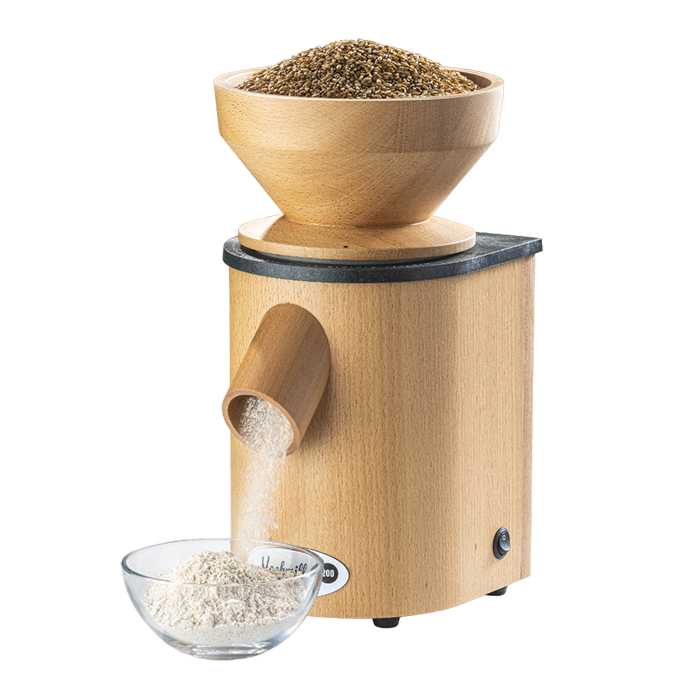
If you mill your own flour, it’s worth mentioning that fresh flour off a home flour mill carries more of its natural wild yeast and enzyme activity than flour that’s been sitting on a shelf for months, and it pairs well with treated water for a noticeably more active starter.
Your starter doesn’t care about brand loyalty or which camp of sourdough advice you follow. It cares about consistency. Find out what’s actually in your water, pick an approach that suits it, and let the fermentation take care of the rest.