

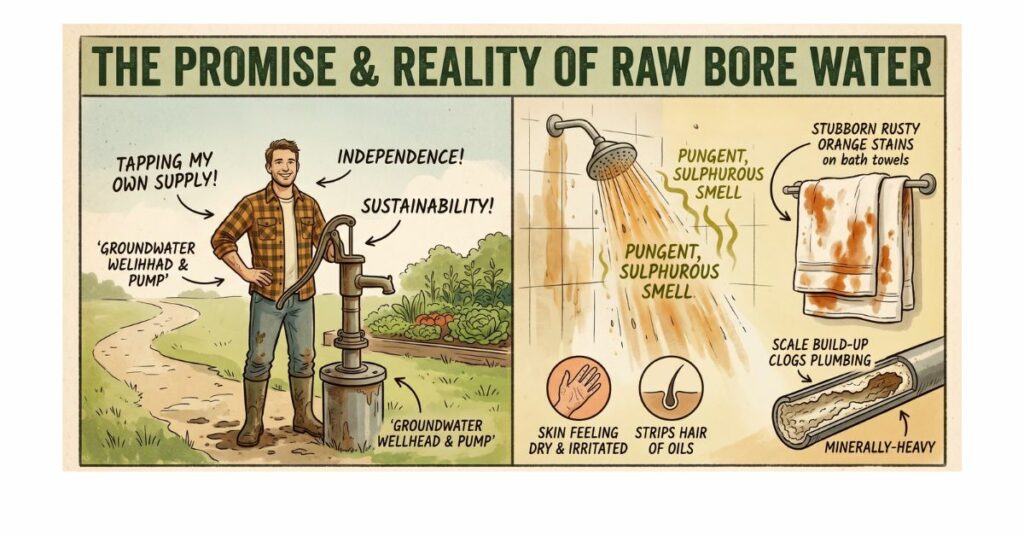
There is nothing quite like the feeling of self-reliance that comes with utilising groundwater. Tapping into your own supply feels like a massive win for sustainability and independence. However, that excitement can quickly fade the moment you step into a shower and notice a pungent, sulphurous smell, or when your crisp white bath towels start turning a stubborn shade of rusty orange.
While groundwater is an incredible asset, raw bore water is rarely ready for household use straight out of the ground. Because it travels through soil and rock formations, it picks up a heavy load of dissolved minerals, iron, manganese, hardness, and sometimes even harmful microbiological contaminants. Bathing in untreated water can leave your skin feeling dry and irritated, strip your hair of its natural oils, and slowly ruin your bathroom plumbing with scale build-up. If you are struggling with poor water quality, let’s walk through exactly how to fix it.
The Vital First Step: Test, Don’t Guess

Before buying any equipment, you must get your water professionally tested. Bore chemistry varies wildly from one property to the next. You might have perfectly clear water that happens to be highly acidic and corrosive, or you might have murky water packed with harmless sediment. A comprehensive laboratory analysis will pinpoint exactly what you are dealing with – whether it is iron, heavy metals, hardness minerals (calcium and magnesium), or bacteria – saving you thousands of dollars in trial-and-error equipment purchases.
Filtering Bore Water for Bathing: Your Step-by-Step Options
To achieve clean, refreshing water for your showers and baths, you need to target the specific contaminants revealed in your water test. For a comprehensive remedy, we look toward installing a dedicated house water filtration system. This ensures that every single tap, showerhead, and appliance in your home receives treated water. Depending on your water profile, your bathing purification setup will typically require a combination of the following stages:
- Sediment Filtration: This is your first line of defense. A heavy-duty sediment filter catches physical particles like sand, silt, and sediment. Removing these particles protects your downstream filters and prevents abrasive grit from scratching your shower fixtures.
- Iron and Manganese Removal: If your water smells like metal or leaves rusty brown or black stains in your bathtub, you have elevated iron or manganese. Special oxidising filters or catalytic carbon media beds are required to pull these dissolved metals out of suspension so they can be physically trapped and backwashed away.
- Water Softening: High levels of calcium and magnesium cause “hard water.” Hard water prevents soap and shampoo from lathering properly, leaves a stubborn white scum on glass shower screens, and severely dries out your skin and hair. An ion-exchange water softener replaces these hardness minerals with sodium ions, resulting in wonderfully soft water that preserves your skin’s natural moisture barrier.
- Activated Carbon Filtration: This stage is the ultimate crowd-pleaser for bathing. Activated carbon acts like a sponge for chemical impurities, absorbing unpleasant volatile organic compounds (VOCs), agricultural runoff, and that notorious “rotten egg” hydrogen sulphur smell, leaving your bath water completely odourless.
Pro tip: Showerhead-only filters are generally insufficient for raw bore water. They simply do not hold enough filter media or possess the contact time required to successfully remove heavy iron, hardness, or deep-seated odours. Investing in a proper water filter for bore water at the main entry point of your home is the only way to guarantee a truly clean bathing experience.
How to Make Bore Water Drinkable?
While setting up a multi-stage house water filtration system will give you pristine, crystal-clear water perfect for washing your hair and body, making that same water completely safe to drink requires an extra tier of purification. Bathing water needs to be clear, soft, and odourless; drinking water must be biologically sterile and free from microscopic dissolved solids.
To safely bridge that gap, the gold standard solution is installing a targeted Reverse Osmosis system (RO) at your kitchen sink. While a standard filtering bore water sequence handles the bulk of the heavy lifting, a reverse osmosis unit forces water through an incredibly fine, semi-permeable membrane. This microscopic barrier filters out up to 99% of remaining contaminants that standard filters miss, including dissolved salts, heavy metals like arsenic or lead, fluorides, nitrates from agricultural fertilisers, and microscopic cysts.
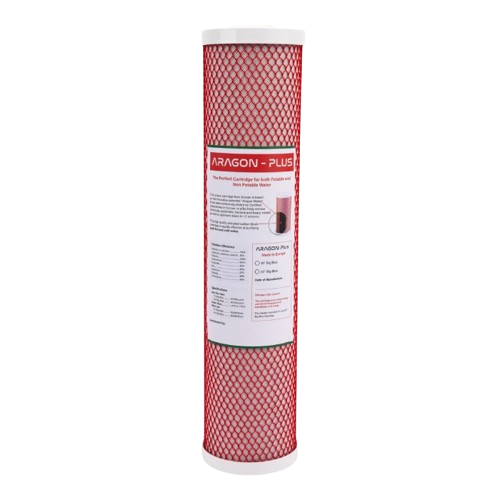
In addition to an RO system, ensuring your water is biologically safe is paramount. If your laboratory test reveals any presence of E. coli or coliform bacteria, a Whole-House Aragon water filter cartridge must be integrated into your filtration system. Unlike carbon cartridges, the Aragon uses a patented filtration media to reliably remove 100% of bacteria and viruses as the water flows through, neutralising them instantly while further improving the taste and smell of your water.

Enjoying Safe, Crystal-Clear Water
Transforming raw groundwater into a gentle, skin-friendly oasis requires a bit of planning and the right equipment. By analysing your water profile and implementing a robust, multi-stage water filter for bore water, you can finally eliminate staining, protect your plumbing, and enjoy a luxurious, restorative bathing experience every single day.