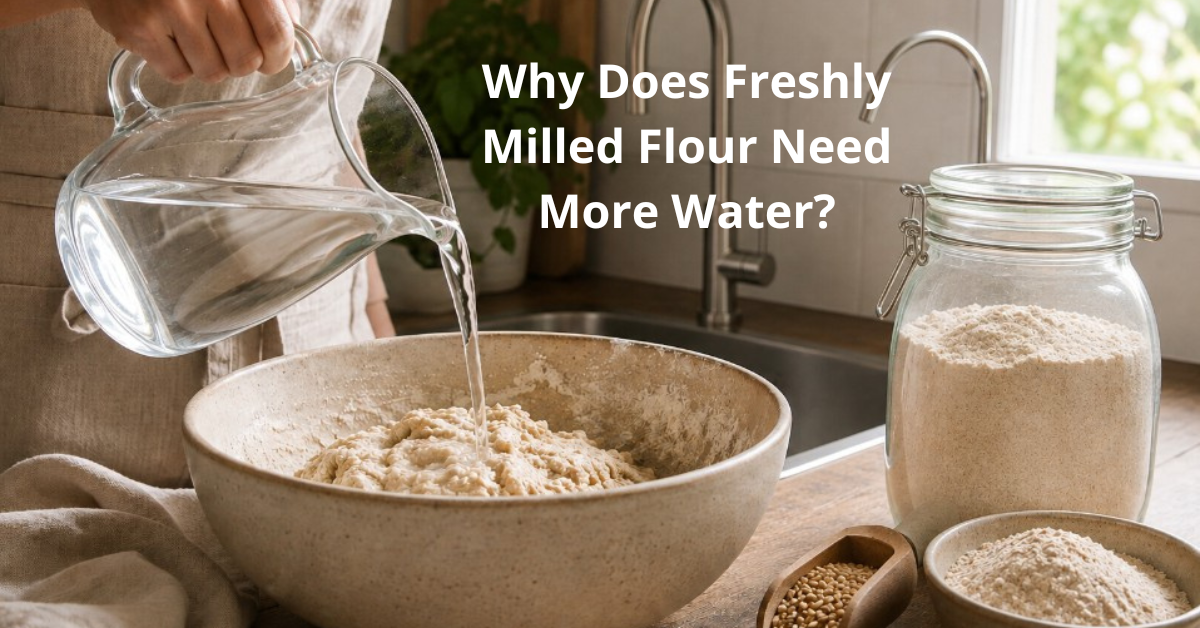
The first time I milled my own flour, I used my usual bread recipe and ended up with a dough that looked more like porridge. Same weight of flour, same weight of water, completely different result. It turns out freshly milled flour and shop-bought flour are not really the same ingredient.
Here is the tactical answer, broken into the parts that actually matter.
Why fresh milled flour drinks more water
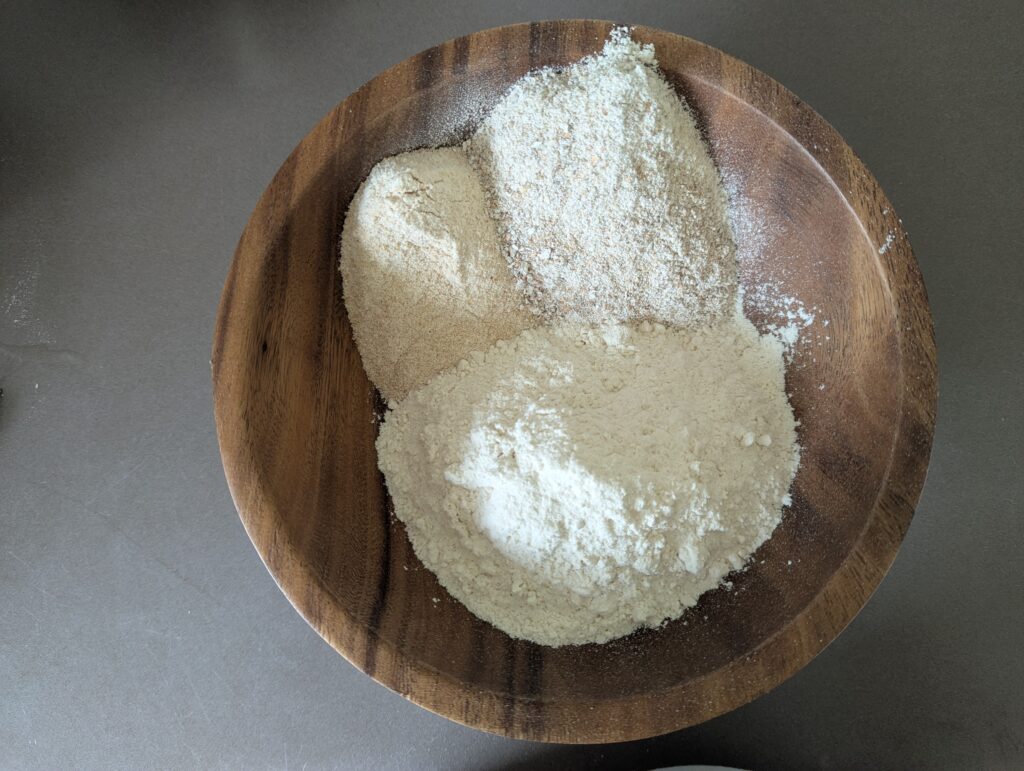
- The starch is more damaged. Milling bruises some of the starch granules inside the wheat kernel, and damaged starch behaves very differently to intact starch. Research published on PubMed found that intact starch granules absorb roughly a third of their weight in water, while damaged granules can absorb several times their own weight. A stone mill, the kind most home millers use, tends to produce more damaged starch than the big commercial roller mills that make supermarket flour. That difference alone can account for a lot of the extra water your dough is asking for.
- The bran is still in there. Shop-bought white flour has had the bran and germ sifted out. Home milled flour, unless you’re sifting it yourself, keeps all of it. Bran is essentially fibre, and fibre is thirsty. It soaks up moisture that would otherwise be softening your dough, which is why a loaf made with 100% fresh milled flour often needs noticeably more liquid than the same recipe made with white flour.
- The particles are less uniform. Commercial mills produce a very consistent particle size. Home mills, especially at coarser settings, produce a wider range, and that irregular surface area changes how much water gets absorbed during mixing.
There’s an easy and practical fix: use the amount of water you usually use as a starting point, not a rule. Then add water gradually, mix, and let the dough rest for ten to fifteen minutes before deciding whether it needs more. This resting period is called autolyse and it gives the freshly milled flour time to absorb the water properly – and it can make more of a difference than you might expect.
How quickly should you use fresh milled flour?
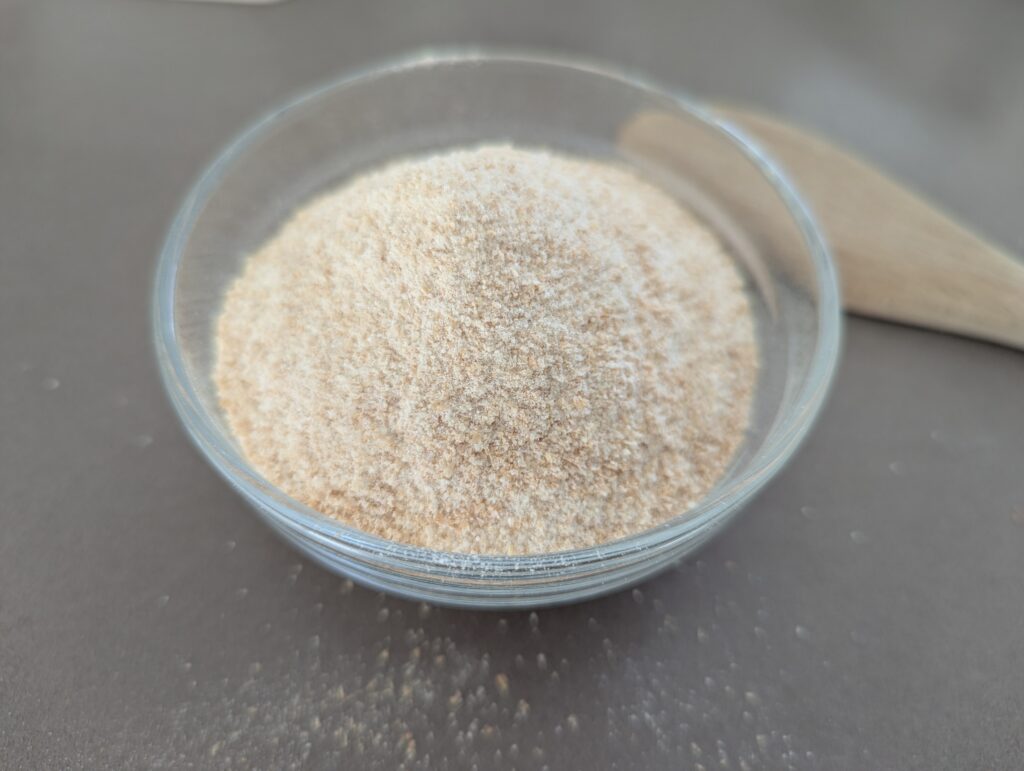
This is where a lot of home millers go wrong. Once the bran and germ are cracked and exposed to air, the natural oils in the wheat germ start to oxidise, a process sped along by enzymes that were previously locked safely inside the intact kernel.
In practical terms:
- Room temperature: best used within two to three days, before oxidation starts affecting flavour.
- Refrigerated in an airtight container: good for one to two weeks.
- Frozen straight after milling: can hold up for several months with far less flavour loss.
If you’re only going to mill what you’ll bake with in the next day or two, room temperature storage in a sealed, opaque container is perfectly fine. This is one of the genuine advantages of a home flour mill. You mill to order rather than relying on flour that was milled, bagged and shipped weeks or months ago.
What type of water is best for baking bread?
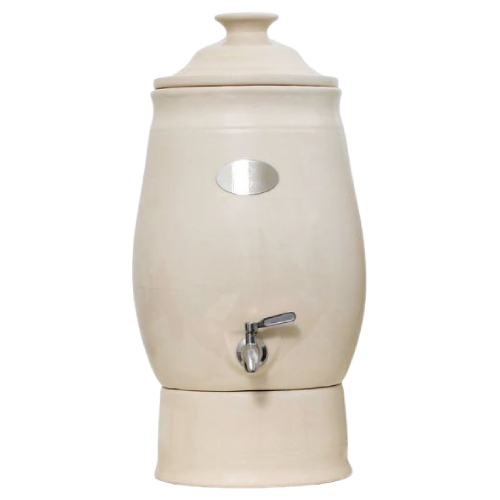
Yeast and wild sourdough cultures do better with some minerals in the water, so distilled water isn’t generally the best starting point. The bigger issue is usually chlorine, and especially chloramine, which Australian utilities use in many capital cities to keep mains water safe over long pipe networks.
Meeting the Australian Drinking Water Guidelines means the water is safe to drink. It doesn’t mean it’s ideal for a living dough culture, since the guideline was written for human safety, not fermentation. If your loaves are inconsistent and you’re on chloraminated supply, filtering it first is generally the simplest fix. A benchtop water purifier handles this well for everyday baking, while an under sink filter is worth it if you want filtered water on tap for cooking too.
Is it true that fresh milled flour is better?
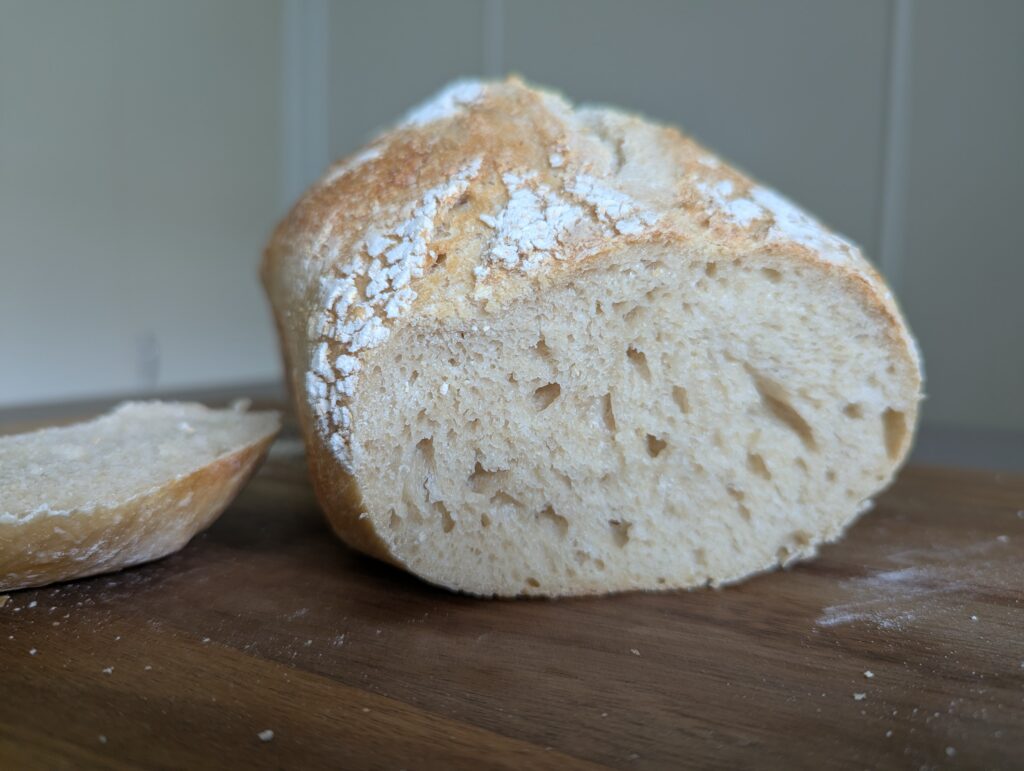
Mostly, yes, though it’s worth being precise about why. A study on wheat milling found that vitamin E and other nutrients drop noticeably once wheat is milled and the germ is exposed to air, with most of that loss happening in the first few days. Fresh flour, used quickly, hasn’t had time to lose those nutrients yet, and it tends to taste more like the grain it came from.
That said, you don’t need a mill to eat well. A good quality organic wholemeal flour from the shop is still a solid choice. The mill is for people who enjoy the process and want the flour at its freshest, not a requirement for healthy bread. Fresh flour isn’t just flour with extra steps. It’s a different ingredient with its own rules, and once you know them, the extra water makes complete sense.