
When I hear the word “uranium,” my brain almost immediately jumps to images of nuclear power plants or high-stakes sci-fi movie plots. It doesn’t exactly conjure up images of a refreshing glass of iced water on a hot day.
So, when I first learned that uranium is a concern in some drinking water sources, I was genuinely surprised—and a little unsettled. I think many of us assume that the water coming out of our taps, whether from a municipal supply or a private well, is just… water.
The short answer to the question “Does water contain uranium?” is: Yes, it can. And it has been found in Australian water supply.
But before you panic and drop your glass, it’s important to understand the context. It’s rarely due to industrial pollution or some nefarious activity. More often than not, it’s entirely natural. I want to walk you through how this happens, particularly if you rely on groundwater, and what you can actually do about it.

Locations of communities in Australia with recorded levels of uranium. (Source: https://www.foe.org.au/uranium_in_australian_drinking_water_snapshot)
What chemicals are in bore water?
To understand how uranium gets into water, we first need to understand the nature of groundwater itself. If you use bore water (well water), you are essentially drinking rain that has soaked into the ground and travelled down through layers of soil and rock until it hit an aquifer.
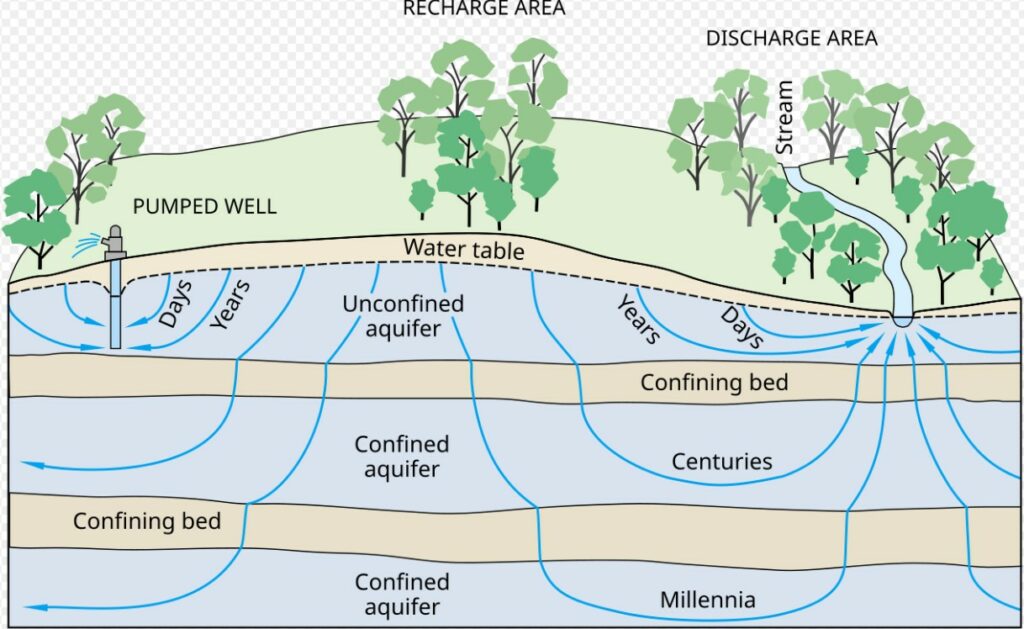
(Source: https://en.wikipedia.org/wiki/Aquifer)
Think of water as the universal solvent. As it travels through the earth, it acts a bit like tea steeping in a pot. It dissolves tiny amounts of whatever it touches.
When I talk to people about bore water, I always explain that “chemicals” isn’t necessarily a dirty word. The unique taste of bore water often comes from natural chemicals—minerals—that it picked up along its journey. This is why groundwater is often “hard.” It has dissolved calcium and magnesium from limestone bedrock. These are naturally occurring chemicals that generally aren’t harmful to our health, though they might be annoying for your plumbing or affect how well your soap lathers.
What are the common contaminants in borehole water?
Here is where we need to differentiate between benign minerals and actual contaminants. While calcium might just leave scale on your kettle, other things the water picks up are less welcome.
Depending on where you live and the geology under your feet, your borehole water might encounter different things. Common contaminants include things like iron and manganese, which taste metallic and stain your laundry rusty orange. In agricultural areas, we often worry about nitrates from fertiliser runoff or bacteria like E. coli from septic systems or livestock.
But what about uranium?
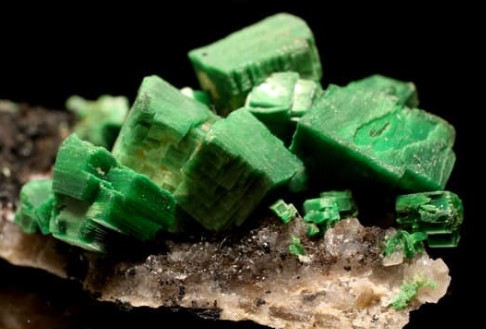
Uranium is a naturally occurring radioactive element found in certain types of rocks, particularly granite and sandstone. It’s not evenly spread across the globe; it’s geological luck of the draw. If your borehole is drilled into bedrock that happens to contain uranium, the groundwater can slowly dissolve that uranium over millennia.
When you pump that water to the surface, you are bringing that dissolved natural uranium with you. It has nothing to do with human activity; it’s just the nature of the geology in your specific location.
Taking Control of Your Water Quality
Knowing this might be unsettling, but knowledge is power. The only way to know what is in your specific water supply is to get it tested by a certified laboratory. You cannot taste, smell, or see uranium dissolved in water.
If your test results do show elevated levels of uranium (or other heavy metals like arsenic), don’t panic. There are very effective solutions available.
If you rely on groundwater, a standard pitcher filter in your fridge is unlikely to cut it. You need a specialised water filter for bore water designed to handle the specific mineral and contaminant load of your area.
Some people I speak to decide to bypass groundwater entirely for drinking and install rainwater tanks. This is a great option, but remember that rainwater washes your roof clean of dust, bird droppings, and leaf litter. Therefore, a quality rainwater tank filter is still essential to ensure the water is safe to drink.
However, for dealing with tough contaminants like uranium, heavy metals, or high levels of dissolved salts, the gold standard in filtration is often a Reverse osmosis water filter. These systems work by forcing water through an incredibly fine membrane that rejects almost everything that isn’t pure H2O, including uranium isotopes.
Ultimately, ensuring your water is safe is a proactive process. Get it tested, understand your local geology, and choose the right filtration for your peace of mind.